Description
The protected area is divided into two distinct zones, which are spatially separate but essentially identical in terms of vegetation, characterised by extensive reed beds, very dense stands of common reed (Phragmites australis), and, in the eastern section, strips of black alder (Alnus glutinosa) riparian woodland.
The other valuable communities of aquatic and marsh plants are, unfortunately, poorly represented: a situation very different from that of the past, before the land reclamation works undertaken between 1777 and 1820, when the marshy meadows covered in sedge beds surrounded the entire lake and, to the north, extended as far as the village of Pergine Valsugana. The vegetation of the Reserve is all that remains of what were once known as ‘the great Pergine marshes’.
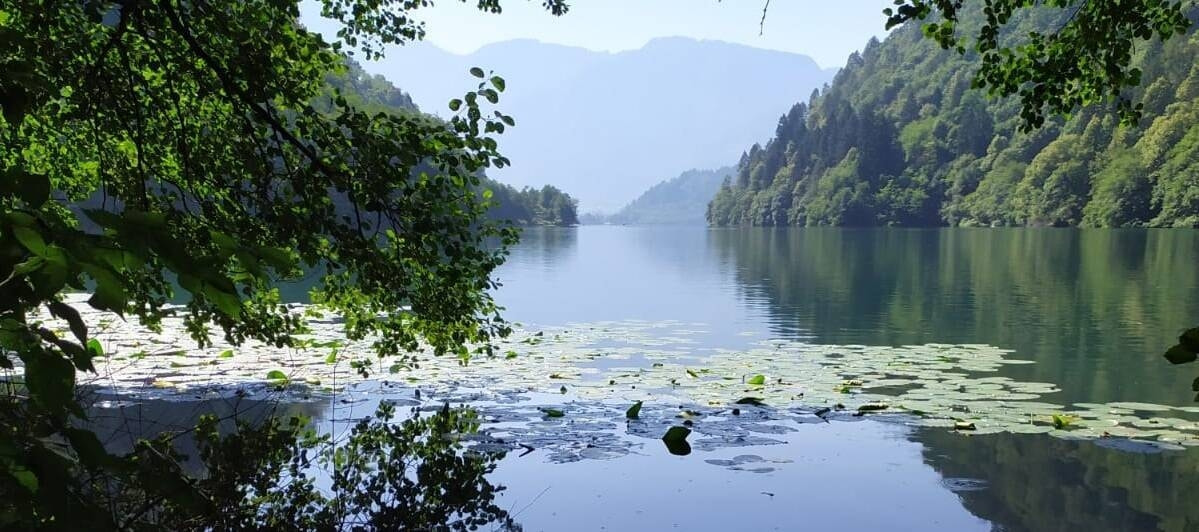
As a partial remedy for the heavy-handed interventions of the past, the white water lily (Nymphaea alba) – an aquatic plant with splendid white flowers that had disappeared from the lake a few decades ago – has been reintroduced into the Reserve and has now re-established a thriving population within the protected area.
The nature reserve’s ecological importance stems from its role in supporting wildlife, particularly as an ideal habitat for many species of waterbirds. The dense and extensive reed beds (among the largest in the entire province) are extremely difficult to penetrate, both from land and from the water, and the birdlife takes full advantage of this tranquillity.
Among the birds present, the most important is the great crested grebe (Podiceps cristatus), a striking waterbird famous for its courtship displays: the Biotope is home to the largest breeding population in the whole of Trentino.
Other interesting species that nest amongst the tangled reeds include the water rail (Rallus aquaticus), the little bittern (Ixobrychus minutus), the coot (Fulica atra), the mallard (Anas platyrhynchos), the reed warbler (Acrocephalus scirpaceus) and the great reed warbler (Acrocephalus arundinaceus).
During winter and migration, grey herons (Ardea cinerea), bitterns (Botaurus stellaris), cormorants (Phalacrocorax sp.), little grebes (Tachybaptus ruficollis), night herons (Nycticorax nycticorax), gulls (Larus, various species), ospreys (Pandion haliaetus), numerous species of ducks and many others.
The need to ensure the essential tranquillity for the birdlife and to encourage nesting, as well as to preserve the delicate aquatic vegetation from potential damage, is the reason for the inclusion within the protected area of the two sections of water in front of the reed beds, which are therefore off-limits to navigation and human access.
Visitor facilities
- walkways and a wildlife observation tower
Publications
- Project for conservation and enhancement
Studies
- Project for the naturalistic and cadastral survey
- Regular birdlife monitoring
- Regular monitoring of amphibians
- studies by the Scientific Committee