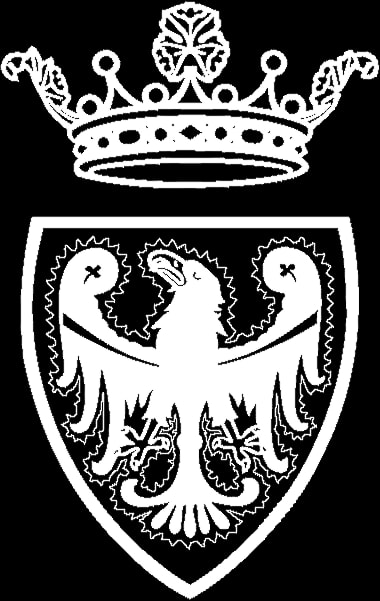
Description
Historical origins
Historical roots of autonomy
The historical origins of Trentino’s autonomy date back to the Middle Ages and are deeply rooted in the region’s Alpine character. It was during this period that participatory forms of self-government spread across the Alps, guaranteeing greater freedoms for local communities and fostering the development of models for the shared management of resources. The Trentino Autonomy nevertheless stems from the region’s status as a borderland, a bridge between cultures straddling the mountains. It is within this context that it acquired a historical identity characterised by the intermingling of different ethnic groups.
1848–1946
The Demand for Autonomy
The first calls for autonomy for Italian Tyrol were made by Trentino representatives at the National Assembly in Frankfurt in 1848. Part of the Austrian Empire first and then the Austro-Hungarian Empire, our region called for self-government on the basis of economic and political grounds, such as the extensive autonomy granted to municipalities and the fact that it was a linguistic minority within the County of Tyrol. Left unanswered, these demands regained momentum in liberal Italy, only to be rejected once more by fascist centralism.
5 September 1946
De Gasperi–Gruber Agreement and the First Statute of Autonomy
The De Gasperi–Gruber Agreement laid the foundations for the autonomy enshrined in the First Statute of 1948. During the peace negotiations following the Second World War, Italy and Austria agreed on safeguards and democratic rights that the Italian State would guarantee to the German-speaking community within a territorial framework to be defined. This would become the Trentino-Alto Adige Region, a territory with an Italian majority and part of a regional system enshrined in the Constitution and gradually implemented over the following decades.
The 1960s
The South Tyrolean question and the Trentino question
The crisis in the Trentino-Alto Adige Region stemmed mainly from the demand for greater autonomy by the German-speaking community living in the province of Bolzano. Fortunately, the deterioration of inter-ethnic relations, Austria’s desire to reopen the territorial issue, terrorism and the harsh reaction of the Italian authorities did not succeed in precluding a political solution. The reform of the Statute also raises a ‘Trentino issue’ at this stage, concerning the role and functions of the Trentino provincial autonomy.
10 November 1971
Package and Second Autonomy Statute
The 137 measures agreed upon by the Italian and Austrian governments to resolve the South Tyrolean question make up the so-called ‘South Tyrol Package’, approved in 1969. This marked the start of the process leading to the approval of the reform of the Statute of Autonomy, through which the Trentino-Alto Adige/Südtirol Region was gradually stripped of its functions and powers in favour of the autonomous Provinces of Bolzano and Trento. It is these two new entities that now exercise autonomy more fully.
1971–2001
Implementation of autonomy and extension of powers
As the Trentino-Alto Adige/Südtirol Region is stripped of its functions and powers in favour of the two Autonomous Provinces, Trentino’s autonomy is gradually extended to ever-wider areas of public life. This has given rise to a form of self-government that allows provincial authorities to legislate on virtually every matter, with the exception of areas traditionally reserved for the state, such as public order, the administration of justice, social security and the minting of currency.
2001–PRESENT
Autonomy in the new millennium
The autonomy guaranteed by the 1972 Statute has not remained static but has been shaped by ongoing negotiations with the State, which, depending on circumstances, has at times expanded and at times reduced the scope for self-government. This has occurred both within the context of comprehensive constitutional reforms concerning the republic’s regional system and in the wake of extraordinary events such as the 2008 economic crisis, the coronavirus pandemic and Storm Vaia.
